Showing posts with label bibliomystery. Show all posts

Thursday, October 23, 2014

Review: First Impressions by Charlie Lovett

If you're a follower of many bloggers, talkers, and reviewers in the bibliosphere, you've probably already heard about Charlie Lovett's new book, First Impressions.   I received a copy of Lovett's latest foray into bibliomysteries from his publisher.


It's good.

Ok, now that's out of the way ... I was a "Decide to read a book, finish it no matter what" reader for much of my life.  If I chose poorly, it was an act of contrition to the bibliogods to finish that crappy book.  But, I was beginning to feel like Life's Too Short for that kind of strict observance.  I started asking around what other readers did.  Some read to page 100, which seemed like a lot.  I was surprised how many were like me -- finish it no matter what.  Those who would drop a stinker didn't follow any guidelines, which should have been obvious with those that lead that kind of bohemian, free-wheeling lifestyle.

I wasn't sure what to think until I heard Nancy Pearl's good advice (like so much of her advice), to subtract your age from 100, and that's the number of pages you should give a book.  As you age, and your reading time on earth shortens, and you become a better judge of literature, you don't have to be quite so full of grace for books that don't quite deserve to take up precious reading time.

So, for me, that means 66 pages.

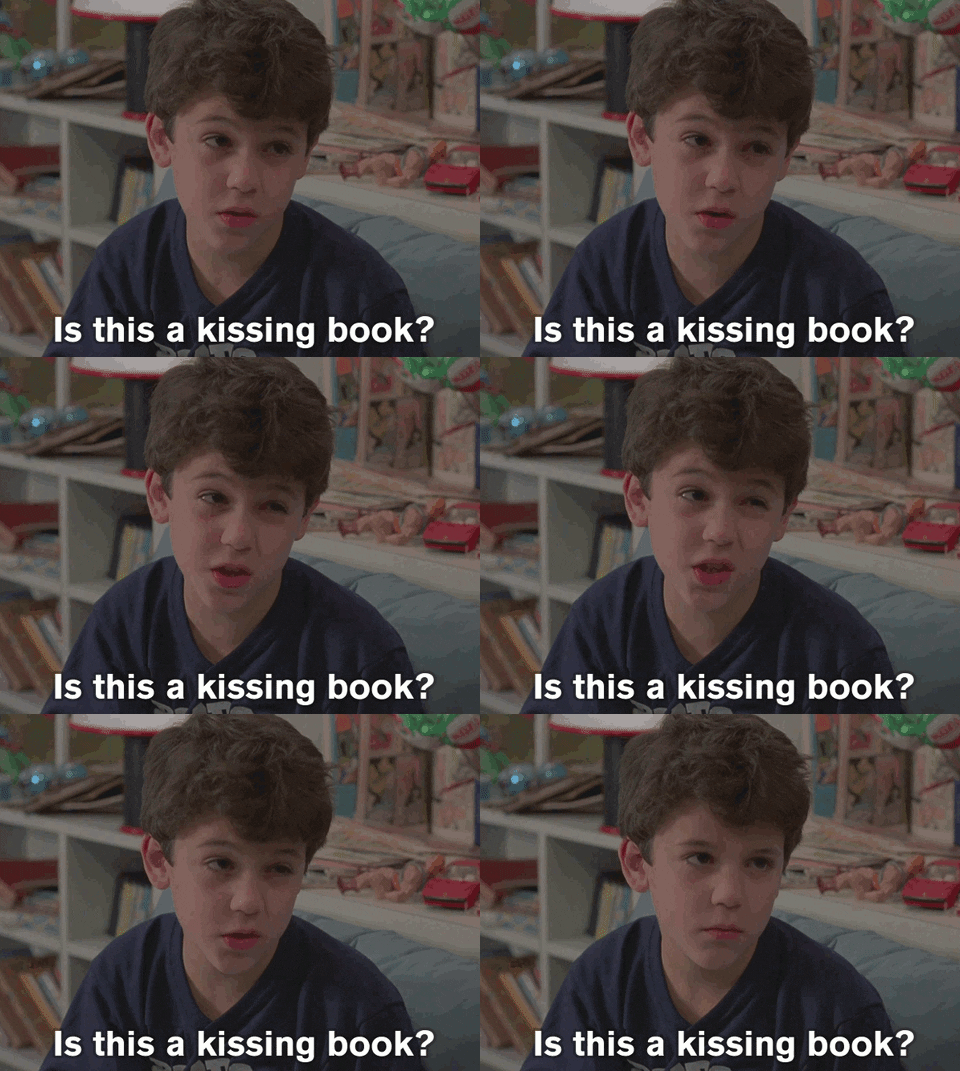
By page 40, Fred got his answer:


Yes.  Yes it is a kissing book.

And by page 66 (actually well before page 66 ...), I was hooked.  But it was good I had had adopted that guidance to give First Impressions a fair shake -- the opening is cheesier than the pick up lines borne bravely by our protagonist.  (An aside: I had a lot of terrible First Impression puns I've spared you. You're welcome.)  Not that I'm cheesy-opposed -- I'm a big fan of the Aubrey-Mauturin series, but when it comes to romance, I prefer it given a bit more straight. 

Anyway, back to the task at hand, I found myself drawn in by Sophie Collingwood, a bibliophile in modern London who inherits an amazing library and far more trouble than she ever wanted.  A curious bibliophile through and through, I was fascinated to tag along with her for a fun story, intertwined with a story about Jane Austen.  I'm no Jane-ite, so I'm definitely not the best one to tell you how accurate/ fulfilling/ uhhh..... Janey(?) that part of the story was, which I know is why many readers will pick this one up.  To be honest, I found myself frequently wanting to skip ahead to the modern side of the tale.  Not so much because the Jane side of the story was not interesting, but that I identified much more closely with Sophie and her side of the tale.  

In the end, it was a good story I'd recommend especially to anglophile bibliophiles, and I deeply hope it's a dandy for the Jane Austen fans out there.  After all, it's probably been at least a week since the Jane-ites had a new book to read, which can be wayyyyy too long for you people.  Also in the plus column, I'd rank it highly on "bibliofactor".  The book stuff was meaty and not at all the simple McGuffin some authors try to foist off on us, rather the only setting in which this story could be told.  Very good stuff.

Anyway, don't forget you can find me all over the web: Twitter, Tumblr, and .... places.

Enjoy this post?  Why not subscribe to my newsletter?


Monday, May 5, 2014

New Bibliomystery by Charlie Lovett coming

Charlie Lovett's second foray into bibliomysteries is coming this fall (October it sounds like).

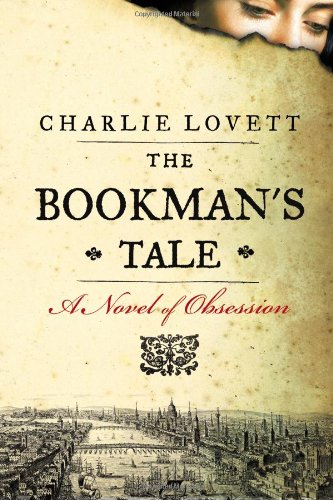
Last year I really enjoyed The Bookman's Tale, which delves into Shakespeare, art, book collecting, and plenty of mystery and suspense.  And a little romance, but not too much.  I can be a bit like Fred Savage in The Princess Bride when it comes to the romance sections ... Not that I don't *like* kissing, I do!! It's just sometimes in mysteries it can feel awkward, or somehow the author felt it was obligatory and characters go through passionless motions, or many other unfortunate experiences mirrored in my own life now now that I'm dating again and ...  Wow, I am derailed. Anyway....

The Bookman's Tale was a good read, and includes a satisfying amount of biblio-ness (and art too!).  It's rooted around Shakespeare, which for me is honestly a strike against a bibliomystery (especially a new author!).  There have been lots of real mysteries surrounding Shakespeare and his works, and some really exceptional fictional ones too.  But, Bookman's Tale holds up which isn't surprising once I learned Lovett has a deep passion for rare books, and has spent time doing the necessary research to meet a bibliophile's critical eye.

It wasn't that books and the book world were merely the McGuffin to keep the plot plodding along, or that the main character's employment tangentially involved books -- so there's a few scenes in a library (or the moon for all it matters) -- NOT SO!  Peter Byerly (the main character) is a rare book dealer who has lost his wife ... with lots of flashing back to their early years together (which informs the mystery), which undoubtedly a devoted husband would do at such a time.  It was good, not sappy, and certainly not a story that just happens to include a book or two to tell the *real* story of a man and woman falling in love.  NOT HERE!  The bibliofactor is on the same level of importance as the characters and the setting, which is what I look for in bibliomysteries.  So, The Bookman's Tale is a recommended read from me if you haven't read it yet.  Then you can join me looking forward to First Impressions.

First Impressions, coming out this fall, will also delve into authorship, Jane Austen, and more old books.  And being rooted in Jane Austen, I bet there'll be some kissing and I'll like it.

From the publisher:

First Impressions: A Novel of Old Books, Unexpected Love, and Jane Austen (Viking; October 16, 2014; 978-0-525-42724-7)

Book lover and Austen enthusiast Sophie Collingwood has recently taken a job at an antiquarian bookshop in London when two different customers request a copy of the same obscure book: the second edition of Little Book of Allegories by Richard Mansfield. Their queries draw Sophie into a mystery that will cast doubt on the true authorship of Pride and Prejudice—and ultimately threaten Sophie’s life.

In a dual narrative that alternates between Sophie’s quest to uncover the truth—while choosing between two suitors—and a young Jane Austen’s touching friendship with the aging cleric Richard Mansfield, Lovett weaves a romantic, suspenseful, and utterly compelling novel about love in all its forms and the joys of a life lived in books.


Tuesday, February 15, 2011

Booklovers' Mystery Series - Julie Kaewert

I found this series via LibraryThing, the best readers' site on the web. Period. I managed to find all the books of the series via BookMooch or *very* cheap online. I read them all over about 2 weeks this fall, so it's a little murky now.

The series basically boils down so:
Alex Plumtree inherits the multi-generation London-based book publishing company that allows a pretty comfy lifestyle. He's close to his Father's business partner and his old college roommate's widow. Bad things ensue of varying bibliophilic endeavors.

The first one was pretty uneven. The second was not very good, but better than the first (as I recall). I accidentally picked up the fifth installment instead of #3 for one last go--- and it was pretty good! Kaewert's writing improves and the story is better paced. There are a couple plot holes that are left open and one with a bonus character whose involvement with the villain is never explained.

The main romance element that runs through the series is ridiculous and feels forced in every book, but in #5 it gets an over the top explanation that works in context. Almost. Also in #5 Ed Maggs is a main character! I enjoyed it and went back to #3 with much less dread, and happily finished the series.

For me, one of the most important element to a bibliomystery is the biblio-element. It can't simply be the McGuffin. It's gotta be *real*. This is where Kaewert did a good job. The biblioness is deep and very real. And each book deals with a different element of the bibliosphere-- fine printing, fine binding, collecting, incunabula, book collector societies, publishing, Bloomsbury, mysterious authorship, Pepys, etc. Julie Kaewert is a fellow bibliophile and I can certainly gloss over the few rough patches in the series to spend some time in this fun world where typography is a matter of life and death.

So all-in-all, the stories were good, and pretty enjoyable. This isn't complicated stuff, but it was fun bed time reading for this bibliophile. Kaewert's website reports a potential Plumtree prequel and perhaps even a new series. I'll certainly watch for them.

Thursday, October 14, 2010

Bibliomysteries

It's not often I actually address real life reading on this blog... I'm not sure why. Unlike some book collectors, I really do read! I even read the books I collect. Actually, that's how I often decide what book to find in the nicest 1st I can afford is by reading a pip. Especially in the category of Bibliomysteries.

What is a bibliomystery? I generally agree with the definition used by the Graduate School of Library and Information Science (GSLIS) at Simmons College, in Boston--- the one active institutional collection of which I'm aware. They say:

"Bibliomysteries are mysteries in which books, manuscripts, libraries of any kind, archives, publishing houses, or bookstores occupy a central role, or mysteries in which librarians, archivists, booksellers, etc. are protagonists or antagonists (and preferably the location or occupation is important to the plot or theme). Our collection does not include academic mysteries or mysteries which happen to be about journalists, authors, or literary figures unless libraries, books, manuscripts, archives, and so on, are important to the plot."

I've started a bibliomystery group over on LibraryThing, and the discussion has been interesting. Some folks do include things like Jane Austen mysteries, which has Austen as the sleuth, but otherwise no other biblio-element. I don't count those.

So, a new (to me) book has me trolling the fixed-price-venue sites: The Bay Psalm Book Murder. Harris has only written this one bibliomystery, but he won an Edgar for it in 1983. The Edgar is the top prize for mysteries of any genre, so I felt this was a pretty safe bet. Some books in this genre are stinkers, or entirely too "cozy" for me.

Bay Psalm was enjoyable, though not aging terribly well. It read like a novel written in the mid '70s, not the mid-'80s. The treatment of minority characters is a bit dated, but not implausible. Cops are not given the usual mystery novel treatment, which was refreshing. They are actually portrayed as overworked but competent professionals! The bibliofactors of the story/ plot were good, and one of the most enjoyable elements of the story, which unfortunately isn't always true in bibliomysteries. There was one technical issue with how Harriss described foxing (which was perhaps accurate for the time...), but the book does explore printing, typography, binding, paper, and of course, some of the earliest American printing in a way that doesn't bog the reader. These elements are also not blended in as filler.

If you enjoyed John Dunning's Bookman mysteries (like I generally did), this is a natural fit for you. Harris is a decent writer, the style is good but very California (which I don't love). The setting doesn't feel false; Harris knows these places. The protagonists in Dunning's books and Bay Psalm Book Murder are both named Cliff, even.

If you want to find other Bibliomysteries, check out the Bibliomystery group on LibraryThing, or check out the bibliomystery collection I set up for my library on LibraryThing!


.